


Biographical note on the Jain spiritual leader, founder of Ahimsa Vishwa Bharati and advocate of peace, non-violence and interfaith harmony
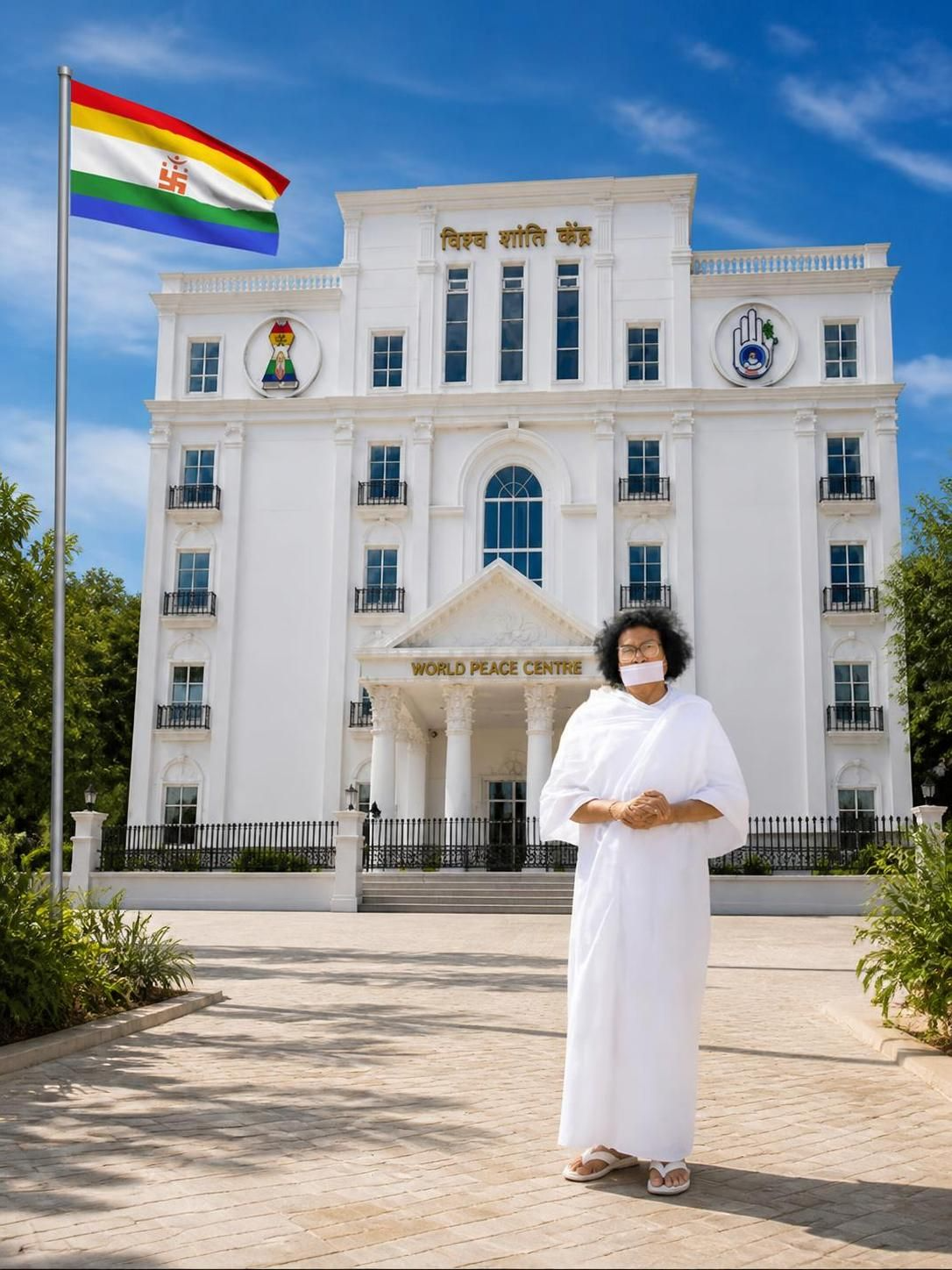
By CA Anil K. Jain
Chartered Accountant | Macro-Economist | Policy Researcher | Author
President – Ahimsa Foundation India
Acharya Dr. Shri Lokesh Muni Ji Maharaj Saheb is a Jain spiritual leader, scholar, author, poet and social reformer known for his work promoting Ahimsa (non-violence), communal harmony, human values and peace education. He founded Ahimsa Vishwa Bharati, an organisation established to translate the ethical principles of Jainism and other spiritual traditions into practical efforts for social welfare and interfaith understanding. His public work extends beyond religious discourse. He has participated in national and international discussions on peace, brought representatives of different faiths together, and campaigned against social problems such as female foeticide, drug addiction and environmental degradation. The Government of India's records recognise him as a recipient of the National Communal Harmony Award for 2010. His life offers an example of how spiritual conviction can be combined with education, public engagement and service to society.
Acharya Dr. Lokesh Muni Ji was born on 17 April 1961 in Pachpadra, Rajasthan, according to the Government of India's award record and several biographical profiles. Growing up in Rajasthan, a region with a long and influential Jain religious and cultural history, he developed an interest in spiritual thought and moral values. His subsequent journey led him towards Jain renunciation, the study of Indian philosophical traditions and a lifelong commitment to the principles of non-violence and peaceful coexistence.
Acharya Lokesh Muni Ji chose the path of renunciation and dedicated himself to spiritual discipline and the study of religious philosophy. He renounced worldly life at approximately the age of 22. For a Jain monk, renunciation represents a commitment to restraint, simplicity, self-discipline and the pursuit of spiritual progress. It is rooted in the understanding that attachment, possessiveness and passions can obstruct the soul's development. The Jain ideal of Ahimsa also extends beyond avoiding physical violence. It calls for care in thought, speech and action, respect for living beings, and a conscious effort to avoid causing harm. Acharya Lokesh Muni Ji's later work brought these principles into wider public life. Rather than treating non-violence only as a personal religious observance, he has promoted it as a practical foundation for social relationships, education, community dialogue and peacebuilding. His journey illustrates a central idea in Jain ethics: spiritual values become most meaningful when they influence the way people treat one another.

Acharya Dr. Lokesh Muni Ji has studied Jain philosophy alongside Buddhist, Vedic and other Indian and international philosophical traditions. His public biographies identify him as a scholar of Prakrit, Sanskrit, Hindi, English and Gujarati, among other languages. He is also described as a writer and poet, with more than a dozen books in prose and poetry to his credit. This breadth of study is significant because Jainism has a rich philosophical heritage, including teachings on the soul, karma, liberation, non-violence and the many-sided nature of truth. Comparative study can help explain how different traditions approach questions of morality, suffering, self-discipline and peaceful coexistence. A particularly relevant Jain principle is Anekantavada—the recognition that reality is complex and that a single viewpoint may not capture every aspect of it. When applied thoughtfully, this principle encourages intellectual humility and a willingness to listen to others. It does not require accepting every claim as equally true; rather, it encourages careful consideration before reaching conclusions. Acharya Lokesh Muni Ji's engagement with different philosophical traditions complements his public advocacy of dialogue between communities. His work seeks to make spiritual values relevant to the challenges of modern society.

One of the most important milestones in his public life was the establishment of Ahimsa Vishwa Bharati, of which he is the founder-president. The organisation was created to promote non-violence, peace, mutual cooperation and human values through social initiatives and public engagement.
The word Ahimsa is central to Jain ethical thought. It means avoiding harm to living beings and cultivating respect, restraint and compassion. By placing this principle at the centre of an organisation working across communities, Acharya Lokesh Muni Ji has sought to take a foundational Jain value into wider social life.
The organisation's stated areas of concern include:
Promoting communal harmony and peaceful coexistence.
Encouraging respect between people of different religions.
Opposing female foeticide and discrimination against girls.
Raising awareness about drug addiction and other social problems.
Supporting environmental awareness and responsible conduct.
Encouraging meditation, yoga, peace education and the development of human values.
These objectives reflect an approach in which religious conviction is expressed through practical service. The emphasis is not only on what people believe, but also on how they treat others and contribute to society.

A distinctive feature of Acharya Lokesh Muni Ji's public mission has been his emphasis on direct engagement with people. His biographies report that he travelled approximately 20,000 kilometres on foot across India, seeking to spread moral values, oppose social evils and encourage peace. This figure is reported by his organisation and the KAICIID profile. The significance of such journeys lies in their emphasis on personal contact. A message of non-violence becomes more than an abstract principle when it is communicated directly to people in villages, towns, religious gatherings and public meetings. The practice of walking to spread a message also has a long history in Indian spiritual and social movements. It can symbolise simplicity, perseverance and a willingness to reach people where they live rather than expecting them to come to the teacher. In Acharya Lokesh Muni Ji's case, this outreach has been connected with efforts to build national character, promote mutual respect and encourage people to reject violence and social discrimination.

Perhaps the most widely recognised dimension of Acharya Lokesh Muni Ji's public work is his engagement in interfaith dialogue and communal harmony. He has participated in forums bringing together people from different religious traditions and has been associated with discussions involving prominent spiritual leaders. His organisational biography also records participation at international platforms, including the Parliament of the World's Religions and the United Nations. The underlying principle is that religious differences need not lead to hostility. Communities can retain their distinctive beliefs while working together on shared concerns such as peace, human dignity, compassion and social welfare. This is compatible with the Jain approach to intellectual openness and non-violence. It also offers a practical response to communal tensions: dialogue can create opportunities to clarify misunderstandings, build trust and identify areas of common purpose.
The Government of India's award profile records that Acharya Lokesh Muni Ji contributed to efforts to ease communal tensions following the Jama Masjid explosion in 2006–07 and tensions between the Dera Sacha Sauda and Sikh communities in 2007. It also records his participation in a long peace march. Such work is important because communal peace cannot be secured by statements alone. It requires patience, communication, restraint and a willingness to engage with people across social and religious boundaries.
Acharya Lokesh Muni Ji's work also includes peace education, meditation and yoga. His organisation describes its approach as bringing traditional practices into conversation with contemporary research and educational methods. Peace education seeks to develop the knowledge and skills needed to handle disagreements without resorting to violence. It can include learning to listen carefully, recognise prejudice, manage anger, respect differences and resolve conflicts constructively.
Meditation can complement this process by encouraging attention to one's thoughts and emotional reactions. When combined with ethical reflection, it may help practitioners become more aware of how anger, pride or fear affect their conduct. The Jain contribution to this approach is the idea that peace begins with restraint at the individual level and extends outward into relationships and society. The aspiration is not simply the absence of conflict, but the cultivation of habits that make respectful coexistence possible. His work in this area is therefore aimed at a broad audience, not only Jain followers. Its emphasis on non-violence and human values can be relevant to students, families, educators, community leaders and people working across religious traditions.

Acharya Dr. Lokesh Muni Ji has linked his message of non-violence with campaigns against social practices that harm human dignity. His published profiles identify female foeticide, drug addiction and environmental pollution among the issues he has sought to address.
His opposition to female foeticide reflects the principle that every human life deserves respect. Discrimination against girls undermines equality and causes harm not only to individuals and families, but also to society as a whole. From an ethical perspective, this concern is closely connected with ahimsa: respect for life must be reflected in social practices and decisions, not merely expressed in religious language.
Drug addiction can affect physical and mental well-being, family relationships and community life. Public education, compassionate support and access to appropriate treatment are important parts of addressing this problem. The spiritual emphasis on self-restraint and personal responsibility can contribute to prevention and awareness, while people experiencing addiction may also need professional medical and social support.
Environmental protection is another area associated with his social mission. Jain teachings place considerable emphasis on respect for living beings and restraint in the use of resources. These principles offer an ethical basis for reducing waste, avoiding unnecessary harm and using natural resources responsibly. Together, these concerns demonstrate how the principle of non-violence can be applied to questions extending beyond individual religious practice.

An important recognition of Acharya Lokesh Muni Ji's public work came in 2010, when he received the National Communal Harmony Award from the Government of India. The award is confirmed in the Ministry of Home Affairs' published list of award recipients, which identifies Acharya Lokesh Muni as an individual recipient for 2010. His profile at the International Dialogue Centre (KAICIID) also records this honour. The recognition is particularly relevant to his work because communal harmony has been a central theme of his public engagement. His efforts have sought to encourage dialogue between communities, reduce social hostility and promote mutual cooperation. Other biographical profiles list additional honours, including the Naitik Samman associated with the Gulzarilal Nanda Foundation, recognition in Milpitas, California, and an Ambassador of Peace award associated with an international peace organisation. These honours are reported by his organisation and partner biographies; individual award details should be checked against the relevant awarding bodies before being reproduced in formal records.

Acharya Lokesh Muni Ji has represented Jain values and Indian spiritual traditions at international gatherings. His biography lists participation at the United Nations, the Parliament of the World's Religions and other international forums focused on peace, religion and human values. He has also been associated with the International Dialogue Centre (KAICIID), an organisation devoted to promoting interreligious and intercultural dialogue. KAICIID's published profile identifies his affiliation with Jainism and his role as founder-president of Ahimsa Vishwa Bharati. International engagement provides an opportunity to explain Jain ideas in a wider context. Ahimsa, self-restraint, compassion and respect for different perspectives are values that can contribute to discussions about peaceful coexistence, social responsibility and the prevention of conflict. His participation in such forums reflects an effort to present non-violence not only as a religious ideal, but also as a practical principle for relations between individuals, communities and nations.
Acharya Dr. Lokesh Muni Ji is also known as a writer and poet. His public biographies report that he has authored more than a dozen books in prose and poetry, addressing religious philosophy, moral values, social problems and peace. His literary work forms another channel through which spiritual and ethical ideas can reach people. Public speaking can inspire an audience in the moment, while books and written reflections allow readers to study a subject at their own pace and return to its ideas over time. A complete, verified bibliography—with individual titles, publishers, publication dates and editions—was not available in the sources consulted for this note. For that reason, it would be inappropriate to present an unverified list of book titles.
The importance of Acharya Lokesh Muni Ji's work can be understood through several enduring principles.
First, non-violence is a positive responsibility. It involves more than refraining from physical harm; it requires thoughtfulness in speech, restraint in conduct and respect for the dignity of others.
Second, dialogue is essential in a diverse society. People do not have to share the same religious beliefs to cooperate in protecting human dignity, supporting education and reducing social conflict.
Third, spiritual values should be reflected in action. The worth of an ethical principle becomes visible when it shapes the way people behave towards their families, neighbours, colleagues and fellow citizens.
Fourth, social reform requires sustained effort. Campaigns against discrimination, addiction and environmental harm need awareness, education, community participation and, where appropriate, institutional support.
These themes connect his Jain spiritual background with the broader challenges of building a peaceful and responsible society.
Acharya Dr. Shri Lokesh Muni Ji Maharaj Saheb represents a strand of contemporary Jain leadership that combines spiritual discipline with public service and interfaith engagement. Born in Pachpadra, Rajasthan, on 17 April 1961, he pursued Jain and comparative philosophical studies before dedicating himself to a life of religious and social work. Through the establishment of Ahimsa Vishwa Bharati, extensive outreach across India, peace education and participation in interfaith forums, he has sought to extend the principles of ahimsa and mutual respect beyond the boundaries of any one community. The Government of India's recognition of his contribution through the National Communal Harmony Award in 2010 provides an independently documented milestone in this journey. His work carries a message of continuing relevance: religion finds a powerful expression when it encourages compassion, protects human dignity, reduces hostility and helps people of different backgrounds live together peacefully. For followers of Jainism, his public mission offers an example of taking the ideal of Ahimsa Parmo Dharma—non-violence is the highest duty—and applying it to the practical concerns of contemporary society.


-------------------------------------------
Mail to : Ahimsa Foundation
www.jainsamaj.org
R010814 / 271026

Ahimsa Foundation warmly welcomes information, photographs, literature, articles, and other meaningful contributions for publication on this web portal: www.jainsamaj.org | ✉ CAINDIA@HOTMAIL.COM
We also invite advertisements and sponsorship support to help us expand the reach of this social initiative and promote public awareness of Jain ideology.
 Related
 Related
 Related

Copyright © 2026 jainsamaj. All rights reserved.