


“A Historic Call For World Peace”
An international peace initiative bringing Christianity, Islam, Judaism, Hinduism, Buddhism, Jainism, Sikhism and other faith traditions together to influence political leadership and promote lasting peace.

The world is passing through one of its most dangerous geopolitical periods. The conflict involving Iran, the United States, and Israel is not merely a regional military confrontation. It has the potential to destabilise the entire Middle East, disrupt trade and energy supplies, deepen divisions between religious communities and draw other nations into a wider war. Behind the military operations, sanctions and strategic calculations lies a human tragedy. Soldiers and civilians die, families are displaced, children grow up amid violence, and generations inherit hatred instead of hope. The question deserves serious consideration: if politicians, diplomats and international organisations have not achieved a lasting settlement, can the world’s most respected religious leaders come together and use their moral authority to persuade political leadership to end the hostilities?
My answer is an emphatic yes—the idea is worth pursuing. Religious leaders cannot replace governments, sign treaties for sovereign nations or enforce peace. But they can change the moral and political environment in which decisions about war and peace are made. Properly organised, a summit could become a powerful moral movement rather than another conference whose declarations are forgotten within days.
On 9 November 2026, Reuters reported that President Donald Trump had indicated a pause in fresh strikes against Iran after appeals from Qatar, Saudi Arabia, the UAE, Bahrain and Kuwait. The US naval blockade nevertheless remained in place, maritime tensions continued and the gap between Washington and Tehran remained wide. This illustrates the difference between a temporary pause and a durable settlement. A ceasefire stops immediate destruction but does not remove the underlying causes of conflict:
Here religious leadership can offer what diplomacy often cannot: a moral appeal addressed directly to the conscience of leaders and citizens. Christianity, Islam and Judaism share historical and spiritual roots in Abraham, and all three teach the sanctity of life, compassion, justice and forgiveness. The aim is to turn this shared heritage into a practical international peace movement.
The summit must be genuinely international, balanced and representative. It must not be seen as an initiative of America, Israel, Iran or any single denomination.
Pope Leo XIV (Vatican). The Pope is among the most influential moral figures in the world. His participation should be central: he can convene Christian institutions and encourage direct engagement with Muslim and Jewish authorities Its representatives can bring together Orthodox, Protestant, and other traditions, since Christian leadership is not limited to the Catholic Church. The Ecumenical Patriarch of Constantinople, Anglican leadership and Protestant and Evangelical representatives should also be invited.
Both Sunni and Shia leadership must be present. Without this balance the summit would lack credibility on the Iran conflict.
Grand Imam Ahmed Al-Tayeb (Egypt) is one of the most influential Sunni scholars in the world and a natural co-chair. His earlier engagement with the Vatican provides a foundation.
Grand Ayatollah Ali al-Sistani (Iraq) would be extremely valuable given his standing among Shia Muslims. His meeting with Pope Francis in Najaf in March 2021 showed that direct engagement between the highest levels of Christianity and Shia Islam is possible.
Other invitees should include senior Shia authorities from Qom, leading Sunni scholars from Saudi Arabia, the Muslim World League, the religious and educational institutions of the Organisation of Islamic Cooperation, and scholars from Qatar, Jordan, Turkey, Pakistan and Indonesia. Religious authorities respected within Iran must participate; without them the summit would have little capacity to influence Tehran.
The two Chief Rabbis of Israel, leading rabbis from the major Jewish movements and respected scholars from the United States and Europe should be invited. A summit discussing Israel’s security and the wider Middle East cannot be inclusive without them. Jewish religious leadership is diverse, and its authorities do not necessarily share the views of the Israeli government.
Observers should take part without controlling the proceedings: the UN Secretary-General or a representative, the UN High Commissioner for Human Rights, former heads of state respected by both sides, peace negotiators, and humanitarian organisations and representatives of civilian victims. The summit must remain independent of governments.
The venue should symbolise neutrality, coexistence and international cooperation. Three options deserve consideration.
Option 1: Geneva (first preference). A long diplomatic tradition, major UN institutions and a neutral environment for sensitive negotiations.
Option 2: Abu Dhabi. The Abrahamic Family House brings a mosque, church and synagogue together and carries extraordinary symbolic weight.
Option 3: Vatican City. A spiritual centre, though Geneva or Abu Dhabi may offer a more neutral setting for political engagement.
My recommendation is to hold the inaugural summit in Geneva, jointly sponsored by the Vatican and Al-Azhar, with the UAE, Saudi Arabia and other interested countries supporting its organisation, under the title:
The summit must not become an academic discussion of religious philosophy. It should produce practical commitments.
A call on Iran, the United States and Israel to cease offensive operations, including missile and drone attacks and air strikes; to protect civilians; to spare hospitals, schools, places of worship and essential infrastructure; to allow safe evacuation and humanitarian access; and to protect commercial shipping and civilian aircraft. The appeal must address all parties equally and must not condemn violence selectively.
A ceasefire cannot be the final objective. The summit should recommend a permanent negotiating channel among Iran, the United States and Israel, with suitable regional participation and UN or other acceptable mediators. A small Interfaith Peace Council would monitor progress and encourage compliance.
The summit should support:
Israel faces real threats from missiles and armed organisations, and a lasting settlement cannot ignore any party’s security. At the same time, Israel must be encouraged to respect international law, civilian life and the sovereignty of its neighbours.
A broader security arrangement involving Iran, Israel, Saudi Arabia, the UAE, Qatar, Iraq, Jordan, Egypt and others, so that the Middle East does not become a permanent battlefield for competing powers.
Muslims, Christians, Jews and others must be protected. Religious institutions, ancient places of worship, cultural heritage and minorities must never become targets.
A clear declaration that no religion can justify terrorism, indiscriminate violence or the killing of innocents, and a commitment to discourage extremism and propaganda that dehumanises any community.
Religious leaders command no armies and sign no treaties for governments. Yet history shows that their influence over public opinion and political conscience can be substantial.

His 1979 visit to Poland inspired millions and strengthened citizens seeking freedom and dignity. His link with the Solidarity movement posed a powerful moral challenge to the communist establishment. He did so without military power, through faith, inspiration and the mobilisation of society.

Tutu was among the most influential moral voices against apartheid. After its end, the Truth and Reconciliation Commission he chaired became a key instrument of national reconciliation. The lesson: peace is not merely the absence of violence; it also requires justice, forgiveness, accountability and restored dignity.

On 4 February 2019, Pope Francis and Grand Imam Ahmed Al-Tayeb signed the Document on Human Fraternity for World Peace and Living Together in Abu Dhabi. It called for dialogue, protection of human life and an end to the exploitation of religion for violence. The proposed summit should not start from zero; it should turn this declaration into an actionable peace programme.
Catholic and Protestant leaders helped keep communication open, supported marginalised communities and pressed politicians to engage constructively. The 1998 Good Friday Agreement was a political agreement, not a religious treaty, but religious and civil society initiatives made peace more achievable. A 2026 academic study of religious peacebuilding there highlights three contributions: representing marginalised voices, holding political power accountable, and modelling principled leadership, partnership and persuasion.
No Pope, Grand Imam, Ayatollah or rabbi can legally compel a sovereign government to stop a war. A united religious leadership can, however, create pressure through five channels:
The objective is to make continuing war politically, morally and socially harder than pursuing peace.
1. Immediate peace appeal: a joint call to end hostilities and protect civilians.
2. Permanent Interfaith Peace Council: 15–20 respected representatives of Sunni, Shia, Christian, Jewish and other traditions.
3. Direct political engagement: delegations meeting the leaders of Iran, the United States and Israel, separately and jointly where acceptable.
4. Independent monitoring: regular public reports on ceasefire implementation, civilian protection, humanitarian access and negotiations.
5. Annual World Peace Summit: to review commitments and address emerging conflicts.
Three delegations should be formed: one to Washington to meet the President and Congressional leaders, one to Tehran to meet political and religious leaders, and one to Jerusalem to meet the Prime Minister, the President and religious authorities. All three should carry the same message: security for all, dignity for all, justice for all and an end to war. The summit should also ask the UN Secretary-General to appoint a special representative linking the Interfaith Peace Council with the diplomatic negotiations.
The initiative must not be restricted to the Abrahamic faiths. Traditions from Asia and other regions have great potential to strengthen the peace movement.

The world is one family. This principle teaches that humanity is interconnected and that differences of nationality, religion and culture should not destroy human relationships. Respected Hindu leaders and institutions such as the Ramakrishna Mission could contribute greatly.

Buddhist teachings emphasise compassion, mindfulness and freedom from hatred. The Dalai Lama’s international moral influence could strengthen the appeal for reconciliation.
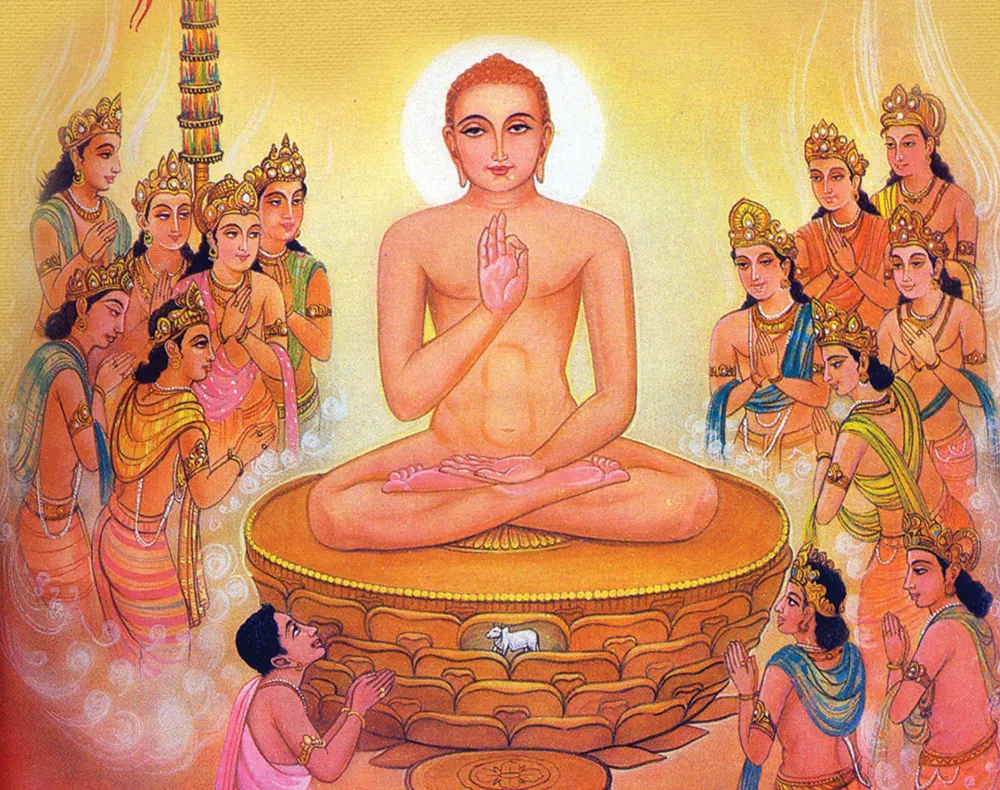
Jainism offers one of the most direct philosophical answers to war: non-violence is the highest duty. It extends beyond physical violence to restraint in speech, thought and conduct. Its principle of Anekantavada, the recognition of multiple perspectives, is especially relevant where each side believes itself wholly justified; it encourages humility, dialogue and attention to the concerns of others. Jain Acharyas and institutions should be invited, and could help lead a global campaign for non-violence and the protection of innocent life.

Sikhism teaches the welfare of all humanity. Its tradition of selfless service and community kitchens is an outstanding model of practical humanitarianism. The Akal Takht and other Sikh institutions should be included.
Zoroastrian, Bahá’í and indigenous traditions should also participate. The purpose is not to merge beliefs but to recognise a common human responsibility. Different paths, one shared duty: to protect human life.
A religious summit alone cannot resolve the conflict. Several obstacles are serious:
India deserves special consideration as a supporter and facilitator. Hinduism, Buddhism, Jainism and Sikhism originated there, while Christianity, Islam, Judaism and Zoroastrianism have deep historical roots in the country. India maintains relationships across the Middle East, including with Iran, Israel and the Gulf, and has major interests at stake:
India could propose a preparatory conference with the Vatican, Al-Azhar, major Shia institutions, Jewish organisations and leading Asian traditions, and could offer to host a later global conference on interfaith cooperation. Vasudhaiva Kutumbakam combined with Jain Ahimsa could supply its moral foundation. The government should support the idea through diplomatic channels without controlling or politicising the proceedings.
If the summit succeeds, it could establish a permanent mechanism for preventing religiously aggravated conflicts, including Israel–Palestine, sectarian violence, persecution of minorities, conflicts in Africa and South Asia, and the use of religious hatred to justify terrorism.
I therefore propose a permanent body:

Its functions would include:
It must be independent, transparent and representative of all major traditions, and controlled by no single government or religious institution.
Imagine a historic gathering in Geneva. The Pope sits beside the Grand Imam of Al-Azhar. The Grand Ayatollah of Najaf is present with senior Shia scholars from Iran. Rabbis from Israel and elsewhere take part, alongside Buddhist monks, Hindu leaders, Jain Acharyas and Sikh representatives. They speak different languages and follow different paths, yet share one belief: human life is precious, and innocent people must not become victims of political ambition or military calculation. Imagine them addressing the leaders of Iran, the United States and Israel:
You may disagree politically. You may have genuine security concerns and historical grievances. But no political objective can justify the unlimited destruction of human life. We do not ask you to surrender your national interests; we ask you to protect them through negotiation rather than war. We do not ask you to forget history; we ask you not to let history destroy the future.
The leaders should commit personally to meeting the political leadership of all three countries and to continuing their appeals until a credible peace process exists. The initiative must not end with photographs and speeches; it must become a continuous movement supported by religious institutions, civil society, international organisations and responsible political leaders.
The world faces a historic choice. One path leads to escalation, retaliation, economic disruption and possibly a far wider conflict. The other leads to dialogue, negotiated security, mutual guarantees and lasting peace. Political leaders must choose the second path, but they should not be left to choose alone.
The 2019 meeting of Pope Francis and Grand Imam Al-Tayeb set an important precedent, and Pope Francis’s 2021 meeting with Grand Ayatollah al-Sistani showed that dialogue can reach Shia leadership. These initiatives should now grow into a larger international peace movement, beginning with Christianity, Islam and Judaism because of their direct relevance to the conflict, and then expanding to Hinduism, Buddhism, Jainism, Sikhism and others.
There is no guarantee that religious leaders will succeed, and no single conference can resolve decades of hostility. But the absence of a guarantee is no reason to abandon an effort that could save thousands of lives. After vast military spending, advanced weapons and countless diplomatic conferences, humanity still struggles with a basic question: how can nations live together without destroying one another? Perhaps it is time to try a different approach. Let them sit together, not to debate whose religion is superior, but to affirm that protecting human life is superior to every political disagreement. The ultimate purpose of religion should not be to divide humanity in the name of God, but to unite humanity in the service of peace.
WAR IS A FAILURE OF HUMANITY. PEACE IS ITS GREATEST ACHIEVEMENT.
Let Faith Unite. Let Humanity Survive. Let Peace Prevail.
R11112026
Ahimsa Foundation warmly welcomes information, photographs, literature, articles, and other meaningful contributions for publication on this web portal: www.jainsamaj.org | ✉ CAINDIA@HOTMAIL.COM
We also invite advertisements and sponsorship support to help us expand the reach of this social initiative and promote public awareness of Jain ideology.
 Related
 Related
 Related

Copyright © 2026 jainsamaj. All rights reserved.